
EV charging is shifting from plugs to power, with grid capacity, smart controls and future-ready planning becoming central.
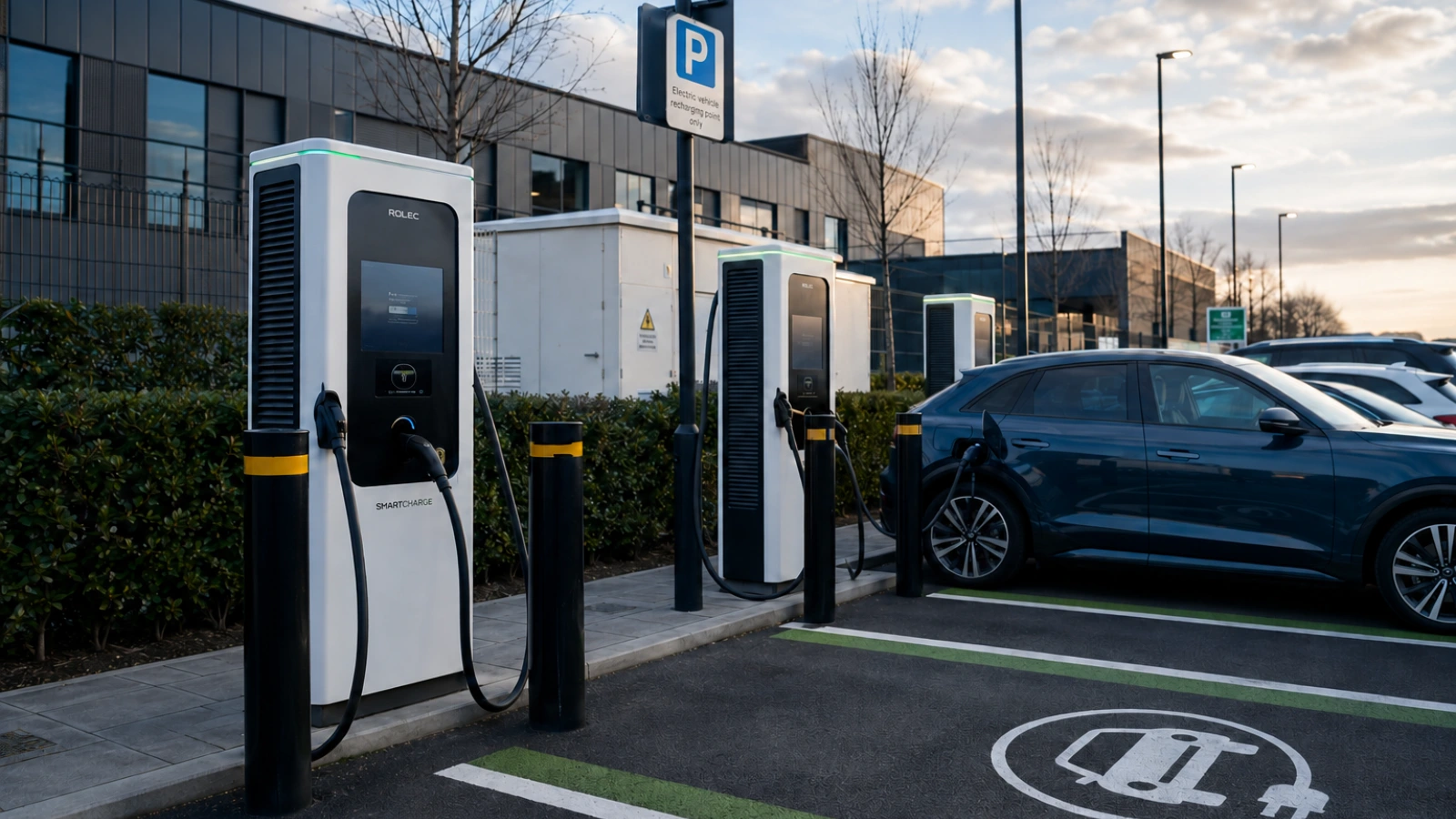
EV charging is moving into a new phase.
For years, the main question was simple: are there enough chargers?
That still matters. Drivers need reliable places to charge, fleets need dependable turnaround times, and local areas need infrastructure that supports the shift to electric vehicles. But in 2026, the conversation is becoming bigger than charger numbers alone.
The next stage of EV charging is about speed, power, grid capacity, smart controls and how charging fits into wider energy and building programmes.
In short, EV charging is no longer just a transport issue. It is becoming an energy infrastructure issue.
Installing chargepoints is only one part of the challenge.
Behind every charging bay is a bigger set of questions. Is there enough grid capacity? Is the site suitable? How will demand be managed at peak times? Can charging be connected with solar, battery storage or building energy systems? Who maintains the infrastructure once it is installed? How will usage, performance and costs be monitored?
These are the questions that matter when EV charging moves from a handful of points in a car park to a larger programme across depots, workplaces, housing sites, public estates or commercial locations.
For organisations planning EV infrastructure, the priority is not simply to install more chargers. It is to create a charging setup that works properly, is affordable to operate and can grow over time.
Ultra-fast charging is becoming a much bigger part of the market.
For drivers, this means shorter charging stops and a better experience on longer journeys. For public charging networks, it means more vehicles can be served in a shorter space of time.
But faster charging also brings more pressure behind the scenes.
High-powered charging needs stronger electrical capacity, careful site design and the right approach to load management. A site may look simple from the outside, but delivering reliable high-power charging can involve grid upgrades, new connections, substations, civils, permissions and ongoing operational planning.
That is why speed on its own is not the full story.
A fast charger is only useful if the site can support it, the connection is suitable, the user experience is reliable and the operating costs make sense.
As EV charging grows, software is becoming just as important as the hardware.
Smart charging systems can help manage when and how vehicles charge. They can reduce pressure at peak times, balance demand across multiple chargers and help avoid unnecessary energy costs.
This matters for workplaces, depots, housing providers and public-sector sites where several vehicles may need to charge at once.
Without smart management, charging can create avoidable strain on the electrical supply. With the right controls, the same site can often operate more efficiently, make better use of available power and support future expansion.
For organisations managing multiple buildings or locations, smart charging also gives better visibility. It can help answer practical questions such as: (ICONS ADDED IN FILES FOR THIS SECTION)
Which chargers are being used?
When is demand highest?
Are vehicles ready when needed?
Is the site performing as expected?
Where might additional capacity be required?
That kind of information is becoming vital for decision-making.
Fleet charging is one of the clearest examples of why EV infrastructure needs proper planning.
A business with a small number of cars may be able to install standard chargepoints and manage charging relatively easily. But vans, buses, service vehicles and heavy goods vehicles create a much bigger challenge.
Fleet vehicles need to be available when routes begin. They often return to the same depot at similar times. They may need predictable overnight charging, rapid top-ups or higher-capacity systems. For larger vehicles, the power requirement can be significant.
That means fleet charging cannot be treated as a simple equipment purchase.
It needs to be planned around routes, dwell times, vehicle types, grid capacity, parking layouts, operational needs and future growth. In some cases, battery storage, solar generation or staged delivery may be needed to make the programme viable.
For fleet operators, the question is not just “how many chargers do we need?”
It is “how do we keep the operation moving?”
Bidirectional charging is another area gaining attention.
This allows power to flow both ways, meaning an electric vehicle could potentially send electricity back to a building, a depot or the grid.
The idea is powerful. Vehicles spend much of their time parked. In future, those parked vehicles could help support energy resilience, reduce peak demand or provide flexibility to the wider electricity system.
For now, vehicle-to-grid technology is still at an early stage. It needs the right vehicles, chargers, software, standards and commercial models. But it points to where the market is heading.
EVs are not just loads on the system. They may become part of the system.
For organisations planning infrastructure now, this does not mean every site needs bidirectional charging immediately. But it does mean future-readiness should be part of the conversation.
Where charging is being installed as part of a wider building, retrofit or energy programme, it makes sense to consider how the infrastructure could evolve.
The most future-focused charging sites are starting to look less like simple car parks and more like energy hubs.
Solar panels, battery storage, smart controls and EV chargers can work together to make better use of local energy. This can help reduce pressure on the grid, manage peak demand and improve resilience.
For some sites, solar can help offset part of the charging demand. Battery storage can help store energy and release it when needed. Smart systems can decide when to draw from the grid, when to use stored energy and when to manage charging demand.
This joined-up approach is especially relevant for organisations with larger estates or long-term net zero plans.
EV charging should not sit separately from energy strategy. It should be considered alongside building performance, electrical capacity, renewable generation, funding routes and future asset planning.
The technology is moving quickly, but successful EV charging programmes still depend on practical delivery.
That means understanding the site before committing to a solution. It means checking power availability, planning works carefully, coordinating contractors, managing disruption and keeping clear records.
It also means thinking about the people who will use the infrastructure.
A workplace charger, public charger, depot charger and residential charging scheme all have different needs. The right solution depends on the location, the users, the vehicles and the long-term purpose of the site.
Poorly planned charging infrastructure can create frustration, extra cost and underused assets. Well-planned infrastructure can support cleaner transport, improve operational resilience and help organisations move towards wider energy and carbon goals.
In 2026, EV charging is no longer just about putting more plugs in the ground.
It is about creating infrastructure that is fast enough, smart enough and resilient enough to support the way people and organisations actually use vehicles.
For businesses, housing providers, local authorities and fleet operators, that means looking beyond the charger itself.
The real value comes from planning the whole system: power, site design, controls, maintenance, reporting, user needs and future growth.
As charging becomes faster, smarter and more connected, the organisations that succeed will be the ones that treat EV infrastructure as part of a wider energy programme, not a standalone installation.
BuiltForward supports organisations with energy infrastructure, retrofit and building improvement programmes.
We help clients shape practical delivery plans, coordinate specialist partners and understand how infrastructure decisions connect with cost, compliance, carbon reduction and long-term asset performance.
If you are exploring EV charging, fleet infrastructure or wider energy improvements, visit our services page to see how we can help move your programme forward.
EV charging is shifting from plugs to power, with grid capacity, smart controls and future-ready planning becoming central.

How technical monitoring helps Warm Homes programmes prove quality and improve retrofit outcomes.

Understanding the link between fuel poverty, housing conditions and better resident outcomes.
Whether you are planning a retrofit programme, reviewing energy infrastructure, exploring funding or looking for a delivery partner, we would be happy to hear from you.


.svg)